


Introduction
The U.S. housing market in 2026 is no longer moving in a single direction. Instead of a nationwide boom or bust, the market has entered a state-by-state correction phase, where some regions are holding firm while others are seeing clear and measurable home price declines.
For buyers, investors, and real estate professionals, this shift represents something rare: opportunity through imbalance.
This in-depth guide explains where home prices are dropping in the U.S. in 2026, why certain states are correcting, how buyers can benefit, and who should act now. If you’re searching for U.S. housing market trends 2026, states with falling home prices, or best places to buy real estate in 2026, this guide is designed for you.
Understanding the U.S. Housing Market in 2026
To understand why home prices are dropping in some U.S. states, it’s important to recognize one key truth:
👉 There is no single U.S. housing market anymore.
What exists instead is a collection of localized markets, each responding differently to economic pressure, population shifts, affordability limits, and supply levels.
Between 2020 and 2024, many states experienced:
- Rapid price appreciation
- Investor-driven demand
- Low interest rates
- Severe housing shortages
By 2026, those same states are now feeling the after-effects of that growth.
This does not signal a housing crash. Instead, it reflects a market reset — a correction driven by fundamentals.
Why Home Prices Are Dropping in Some U.S. States
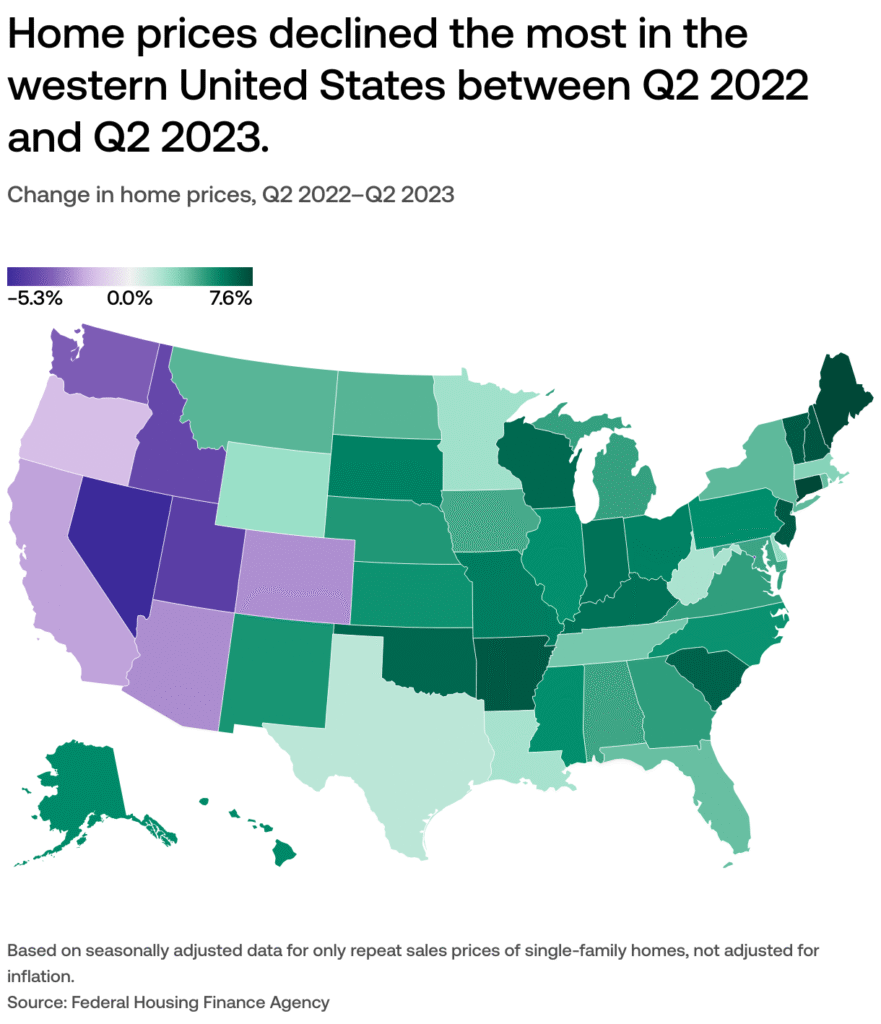
Several interconnected factors are causing state-level home price declines in 2026. Understanding these factors helps buyers make smarter decisions instead of reacting emotionally to headlines.
1. Out-Migration From High-Cost States
One of the strongest drivers of falling home prices is population movement.
States with:
- High taxes
- High housing costs
- Rising insurance premiums
…are seeing residents relocate to more affordable regions.
When population growth slows or reverses, housing demand weakens, putting downward pressure on prices.
2. Oversupply in Select Metro Areas
During the housing boom, builders responded aggressively to demand. In several states, that resulted in:
- Rapid new construction
- Suburban expansion
- Investor-focused developments
By 2026, many of these metros are experiencing inventory build-ups, meaning:
- More homes on the market
- Longer selling times
- Increased seller competition
When supply exceeds demand, prices adjust downward.
3. Cooling Investor Demand
From 2020–2023, investors played a major role in pushing prices upward. However, in 2026:
- Returns are stabilizing
- Financing is more selective
- Short-term speculation has slowed
As investors step back, demand softens — especially in markets that relied heavily on investor activity.
4. Affordability Ceilings Are Being Reached
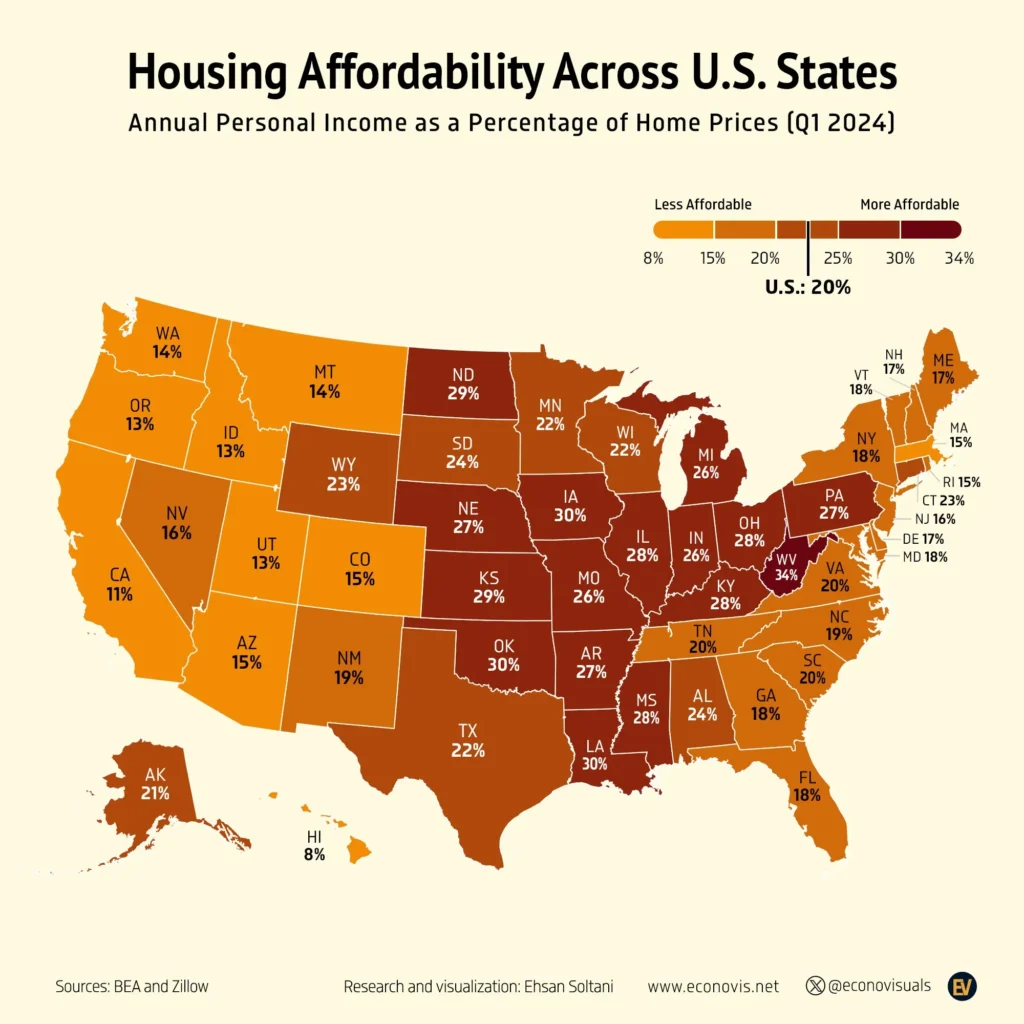
Even in desirable states, prices can only rise so far before buyers are priced out.
In 2026:
- Mortgage payments remain high relative to income
- Buyers are more selective
- Sellers must price realistically
When affordability breaks down, prices correct naturally.
Top U.S. States Where Home Prices Are Dropping in 2026
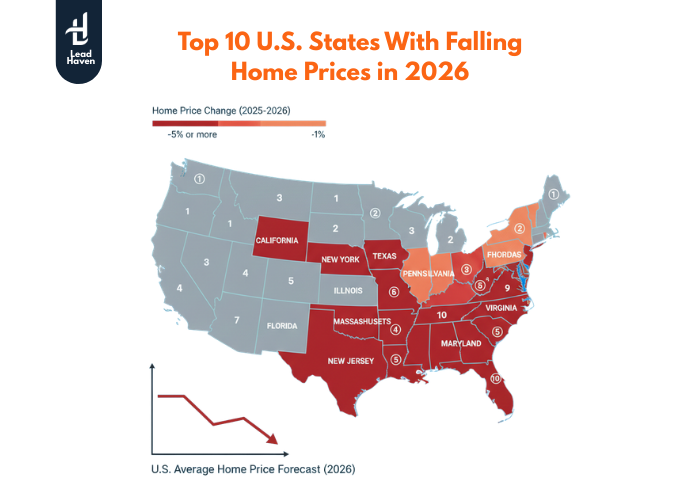
Below are the U.S. states showing the clearest signs of price correction in 2026, based on affordability pressure, inventory growth, and demand normalization.
California
California continues to face:
- Severe affordability challenges
- Out-migration to lower-cost states
- Rising insurance and tax burdens
While prime neighborhoods remain competitive, many suburban and secondary markets are seeing price pullbacks, especially where demand surged too quickly in previous years.
Texas
Texas experienced massive inbound migration earlier in the decade. In 2026:
- Inventory has expanded in major metros
- Buyer urgency has cooled
- Sellers are adjusting expectations
This has resulted in price softening, particularly in newly developed areas.
Arizona
Arizona’s rapid post-pandemic boom led to:
- Fast price appreciation
- Heavy investor activity
By 2026, demand has normalized, leading to post-boom price corrections in several markets.
Florida
Florida remains popular, but rising:
- Insurance costs
- Property taxes
- Maintenance expenses
…have reduced affordability in some regions, causing prices to stabilize or decline in non-premium locations.
Nevada
Investor pullback and shifting demand have softened Nevada’s housing market. Areas that saw speculative growth are now adjusting to more balanced pricing.
Colorado
Colorado’s price growth outpaced income growth in prior years. In 2026, demand normalization and inventory expansion are pushing prices downward in select areas.
Washington
Washington’s housing market is closely tied to the tech sector. Employment volatility and affordability pressures have led to uneven demand, particularly outside core urban hubs.
Illinois
Population stagnation and limited demand growth have contributed to gradual price declines, especially in areas with high carrying costs.
New York
High taxes and ownership costs continue to pressure demand in non-luxury markets, leading to localized price drops.
Oregon
Slower inbound migration and rising living costs have cooled Oregon’s market, particularly in secondary cities.
Is 2026 a Buyer’s Market in These States?
In many of the states listed above, yes — 2026 favors buyers.
Buyers now benefit from:
- More negotiation leverage
- Longer days on market
- Increased inspection flexibility
- Reduced bidding wars
Unlike earlier years, buyers can evaluate options carefully rather than rushing into decisions.
How Buyers Can Take Advantage of Falling Home Prices
Focus on Local Data, Not National Headlines
National averages hide opportunity. Buyers should analyze:
- City-level pricing trends
- Inventory changes
- Days on market
Negotiate Beyond Price
In 2026, sellers are more open to:
- Closing cost assistance
- Repairs and credits
- Flexible timelines
Think Long-Term, Not Short-Term
Price corrections favor buyers with:
- Stable income
- Long-term plans
- Investment horizons beyond quick resale
Who Should Buy Real Estate in 2026?
First-Time Buyers
Those priced out during 2023–2024 now have entry opportunities in previously inaccessible markets.
Long-Term Investors
Investors focused on:
- Rental demand
- Cash flow
- Appreciation over time
…can acquire assets at more realistic valuations.
Relocation Buyers
Buyers moving from high-tax or high-cost states can benefit from relative affordability in corrected markets.
What This Means for Real Estate Professionals
For real estate agents, brokers, and marketers, 2026 is about:
- Education over hype
- Data-driven guidance
- Buyer trust
Professionals who help clients understand why prices are shifting — not just where — will stand out.
Final Takeaway
The U.S. housing market in 2026 is defined by correction, not collapse.
States where home prices are dropping offer:
- Strategic buying opportunities
- Better negotiation conditions
- Long-term value for informed buyers
2026 rewards strategy, not speed.
Buying in the right state matters far more than timing the national market.
👉 Want help identifying opportunities in your specific state or building a smarter real estate lead system? Now is the time to act.